
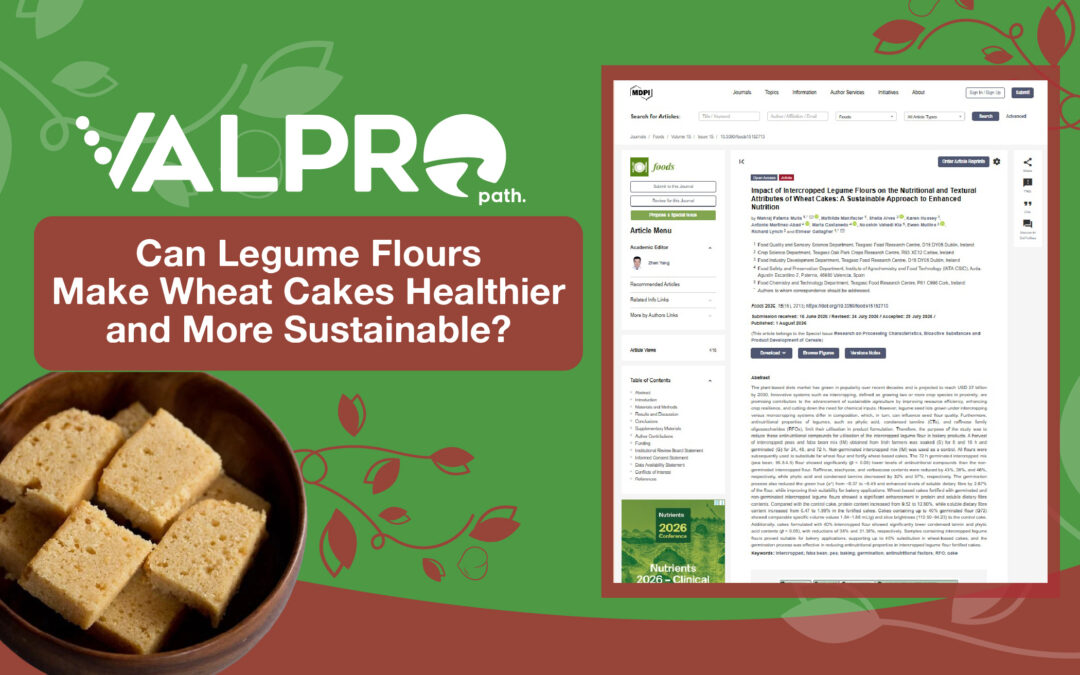
A new research paper from VALPRO Path explores how intercropped pea and faba bean flours can be used to improve the nutritional value of wheat-based cakes while supporting more sustainable approaches to plant protein production.
The paper, “Impact of Intercropped Legume Flours on the Nutritional and Textural Attributes of Wheat Cakes: A Sustainable Approach to Enhanced Nutrition,” was published in Foods in August 2026. The research was conducted by researchers from Teagasc Food Research Centre and Teagasc Oak Park Crops Research Centre.
The study investigates the potential of intercropping, an agricultural system in which two or more crops are grown together, as a way of improving resource efficiency, strengthening crop resilience and reducing the need for chemical inputs. The researchers focused on a mixture of field pea and faba bean grown by Irish farmers and examined how different processing approaches could improve the suitability of the resulting legume flour for food applications.
While legumes are valuable sources of plant protein and dietary fibre, their use in food products can be affected by naturally occurring antinutritional compounds, including phytic acid, condensed tannins and raffinose family oligosaccharides (RFOs). The research therefore investigated whether soaking and germination could reduce these compounds and improve the functional properties of intercropped legume flour.
The results showed that 72 hours of germination was particularly effective in reducing antinutritional compounds in the intercropped flour. Compared with the non-germinated flour, raffinose, stachyose and verbascose levels were reduced by 43%, 38% and 46%, respectively. Phytic acid decreased by 32%, while condensed tannins were reduced by 57%.
Germination also increased the soluble dietary fibre content of the flour and improved its suitability for bakery applications. The researchers then incorporated both germinated and non-germinated intercropped flour into wheat-based cakes at different substitution levels to assess their nutritional and physical properties.
The incorporation of intercropped legume flour resulted in a clear increase in the protein and dietary fibre content of the cakes. Protein content increased from 9.52% in the control cake to up to 12.80% in the fortified cakes, while soluble dietary fibre increased from 0.47% to 1.99%.
Importantly, cakes containing up to 40% germinated intercropped flour maintained specific volume values comparable to the wheat-based control, demonstrating the potential of the ingredient for bakery applications. At the same substitution level, the use of germinated flour also helped reduce antinutritional compounds in the finished cakes, with reductions of 31% in phytic acid and 38% in condensed tannins compared with cakes containing non-germinated intercropped flour.
The findings highlight how combining sustainable cultivation practices such as intercropping with targeted processing techniques such as germination can create new opportunities for the utilisation of European-grown protein crops.
By connecting crop production with food processing and product development, this research contributes to the wider development of more sustainable and nutritious plant-based foods and supports efforts to increase the value and utilisation of European legume crops.
The research contributes to the wider objectives of VALPRO Path, supporting the development of sustainable, nutritious and competitive European plant protein value chains and exploring new opportunities for protein-rich crops and ingredients.
Subscribe to get all the latest information,
news & other insights about VALPRO Path