
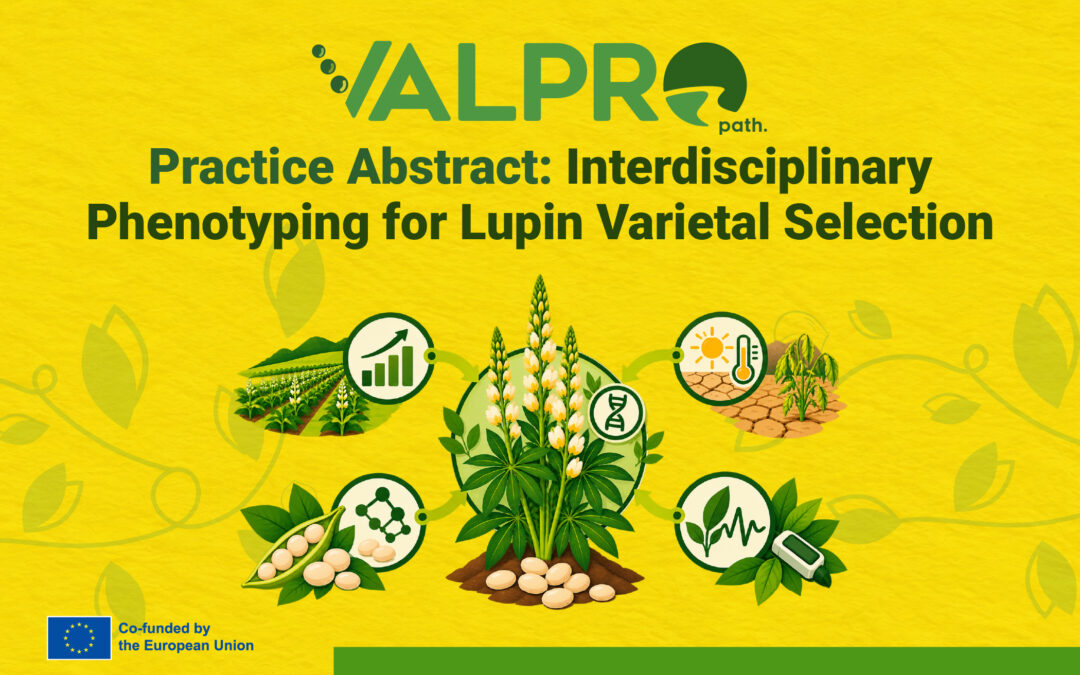
Lupin holds great potential to play a key role in Europe’s plant protein security, but a rise in demand will necessitate varieties which can sustain yield and nutritional quality in a wider range of environmental conditions. An interdisciplinary phenotyping approach for selecting climate resilient lupin varieties is presented in this practice abstract from VALPRO Path partner Aarhus University.
The Problem
Europe is seeking to enhance domestic production of plant proteins and diversify its protein crops, and lupin has great potential as a crop due to its adaptability to a range of conditions, including sandy soils. However, the cultivated area of lupin within the EU has declined significantly.
Climate change adds an extra challenge for lupin growers within the region, as drought and heat stress can have a significant impact on yield, and producers are reliant on varieties with the capacity to sustain yields in such conditions.
Selecting varieties based on yield potential alone is insufficient to meet future demands, and future lupin varieties must also maintain nutritional quality and protein production under climate stress.
How Interdisciplinary Phenotyping Helps
Traditional crop phenotyping often concentrates on characteristics such as biomass production and yield, and physiological performance. The VALPRO Path approach builds on this by incorporating measurements of grain nutritional composition, physiological responses and biochemical analyses into a broader view of plant performance. Researchers at Aarhus University examined the responses of different lupin varieties to heat stress, and how these stresses impacted the nutritional composition of their grain.
The Practice Abstract found, for example, that Primabella and Primadonna were relatively sensitive to heat stress and exhibited poorer yield performance, while Mirabor was capable of maintaining its grain carbohydrate concentration following heat stress.
The Practice Abstract uncovered relationships between the physiological performance of plants under stress and the protein and carbohydrate content of their grain, and suggests that such physiological and biochemical measurements could be utilised to predict the nutritional value of lupin varieties under a range of climate conditions.
By integrating a range of such physiological, biochemical and nutritional measurements, interdisciplinary phenotyping can offer a more holistic approach to selecting plant varieties better adapted to future growing conditions.
Benefits
- Improved Varietal Selection: Selection of varieties capable of sustaining performance under hot and otherwise stressful conditions can enable more reliable lupin production.
- Yield Optimisation: The selection of stress resilient cultivars can support the maintenance of agricultural productivity under future climate conditions.
- Better Nutritional Quality: The consideration of grain protein and carbohydrate composition alongside yield potential offers a more holistic view of varietal performance.
- Region-Specific Production: An understanding of varietal response to different stresses can support the identification of cultivars suitable for different areas within Europe.
- More Resilient Plant Protein Production: More resilient varieties can reduce production losses and support a more reliable domestic supply of plant protein.
The interdisciplinary approach highlights the importance of considering the performance of plants in the field, and the quality of the food they ultimately produce, when selecting varieties for future agricultural systems.
As Europe seeks to boost its domestic production of plant protein, selecting lupin varieties which can continue to yield and sustain nutritional quality under climate stress has the potential to realise the crop’s potential as a contributor to more sustainable and resilient food systems.
Discover how interdisciplinary phenotyping can support the selection of climate resilient lupin varieties. Read the full Practice Abstract below.
Subscribe to get all the latest information,
news & other insights about VALPRO Path